


By Andrew Richard Albanese, Editor-in-Chief
We’re entering the final weeks of summer, and the end of my time filling in for Carlo Carrenho with an abbreviated column. Carlo is due to return next week from a well-earned vacation, and his (far superior) brand of international analysis will return with the August 24th edition.In the meantime, among the headlines this week: U.S. publishing veteran Kris Kliemann is honored with a prestigious industry award; a new initiative seeks to support women in the Brazilian book business; the 90th IFLA World Library and Information Congress wrapped up last week in Korea; a politically charged plagiarism controversy comes to a shocking and tragic conclusion; and, in what’s being called a significant cultural moment, a major digital publishing expo in China will for the first time include a pavilion devoted to online gaming.
A Well-deserved Honor
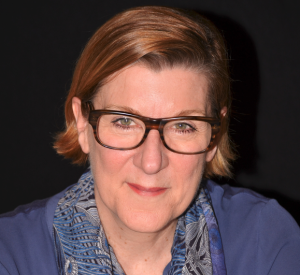
Kris Kliemann
Congratulations to Kris Kliemann, founder of Kliemann & Company, on being named the recipient of the Book Industry Study Group’s 2026 Industry Champion Award. The annual award honors an individual whose efforts “have advanced the publishing industry as a whole,” which, as publishing professionals around the world know, Kliemann has certainly done.
In a release, BISG reps singled out Kliemann’s “longstanding leadership in advancing rights management across the publishing industry and, in particular, her work to bring greater standardization, transparency, and accessibility to rights and royalties.” The committee specifically singled out her role in the development of the Translation Rights Royalty Statement Standard, which addresses a longstanding challenge in international rights: “how royalty information is reported and exchanged, and the time lost managing the variations.”
Kliemann will be recognized on September 16 at the BISG@50: Book Publishing Next Forum & Anniversary Celebration. “Kris has a remarkable ability to see where complexity and friction are holding the industry back and then bring people together to do something about it,” said Allison Belan, Executive Director of BISG. “Her vision for how rights can work better for everyone in the supply chain, and her dedication to bringing order and transparency to rights management, have had—and continue to have—an industry-wide impact.” Very well-deserved!
In Brazil, a New Project Looks to Support Women in Publishing
 PublishNews Brazil reports on a new program that aims to “diversify the voices in panels and discussion events within the publishing industry.” The initiative “The Female Voice in the Book Market,” conceived by Eliete Cotrim and Mônica Carvalho of Editora 34 and Livraria da Tarde, “seeks to debate, value, and amplify the visibility of women working throughout the book production chain—from writing and editing to leading large bookstores, distributors, and publishers. The project launch event will be held on August 18, and will feature a conversation between author and editor Beatriz Bracher and journalist Maria Fernanda Rodrigues.
“Despite statistically making up the majority of readers in Brazil, women still face obstacles in gaining recognition through awards and prominent positions,” PublishNews reports. Carvalho told PublishNews that the initiative came after the founders noticed that panel discussions “consistently included few or no women.” The creators “conceived the project from an optimistic perspective,” the report adds, “envisioning an increase in opportunities, with more women in prominent positions in Brazilian publishing houses, in addition to many of them leading the opening of independent bookstores and prominent fairs on the literary calendar.”
An Analysis of Prague Library Users
 Radio Prague International has a Q&A with Michal Kašpárek, authors of a study that examined the data from roughly 17 million loans made over the last three years at Prague’s Municipal Library, revealing some fascinating trends.
Among the findings making headlines: that women use the library more than men by a nearly 3-1 margin, with the data showing the gap between and men and women begins to show after age 10, expands to its widest point around the age of 35, and starts to narrow after age 50, although “it never returns to a one-to-one ratio.” And then there is this fascinating tidbit: the most borrowed title overall: U.S. YA kids author Jeff Kinney’s Diary of a Wimpy Kid. When limited to adults, however, the most checked out book was The Leaning Church by Czech writer Karin Lednická.
Librarians from Around the Globe Gather in Korea
 The Asia Business Daily reports on IFLA’s 90th World Library and Information Congress, which closed on August 13 in Busan, Korea. The event drew some 3,500 participants from all over the world under the theme “Libraries Powering Transformation,” participating in more than 200 sessions on topics including AI, intellectual freedom, and sustainability. The event closed on August 13.
Following a familiar script for publishing and library conferences in 2026, the report notes that AI was “the central topic” on the agenda. “There is a growing consensus that libraries must be redefined—not just as ‘repositories of knowledge,’ but as reliable public knowledge infrastructures,” the report states. In her opening remarks, Leslie Weir, President of IFLA, told attendees that “libraries must boldly embrace change and serve as agents leading their communities toward a better future.”
As Publishing Perspectives reported this week, IFLA also handed it out its annual awards at the conference, honoring libraries in the U.S., Turkiye, and Spain.
A Murakami Bidding War

Haruki Murakami
In more news from Korea, the Korea JoongAng Daily reports on the bidding war for rights to award-winning Japanese author Haruki Murakami’s new novel. “Every time Haruki Murakami releases a new novel, Korean publishers scramble to outbid each other for the rights—and The Tale of Kaho, his first with a female lead, is no exception, drawing bids from more than 10 houses,” the outlet reports. The report notes that the novel, Murakami’s 16th, drew large crowds “who lined up outside bookstores to buy copies at midnight” when it was first released in Japan on July 3, and has “already sold 300,000 copies in its home country.”
More than 10 Korean publishers reportedly bid, the article notes, including “Munhakdongne, Minumsa, Viche (the literary imprint of Gimmyoung Publishers), and Munhaksasang, all of which have published Murakami’s previous novels.” Reps from the Sakai Agency, which represents Murakami, told reporters that the winning bid won’t be decided on the advance alone, but that the author would make the final call “based on an overall assessment” of the offers, “including trust in the publisher and its promotional budget.”
The 11th International Istanbul Arabic Book Fair Kicks Off in Turkiye
 The Gulf Times reports that the 11th International Istanbul Arabic Book Fair kicked off in Turkiye last weekend. Under the theme “The Story Continues,” the event will bring together more than 300 publishing houses from some 30 countries in what the outlet says is the largest Arabic book fair outside “beyond the Arab world.” Syria is the guest of honor.
“In his opening remarks, President of the International Association of Arab Book Publishers Mehdi Al Jumaili said the fair isn’t only confined to showcasing or selling books but also serves as a platform to debate issues that face the Islamic nation,” the report notes. The fair runs until August 23.
A Tragic Ending
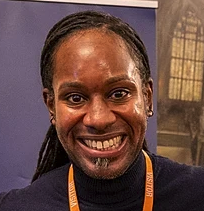
Jason Arday
The Bookseller reports on authors and Cambridge University professor Jason Arday, who was found dead at his home in London on August 14. Arday had been in the headlines in recent weeks following highly politicized accusations of plagiarism. His book, Great and Unfortunate Things, was published in the U.S. last week, and set for release in the U.K. on August 27.
“The first public plagiarism allegations about Arday’s work came last month (21st July) from Nathan Cofnas, a philosopher, former Cambridge professor and critic of diversity, equity, and inclusion (DEI) schemes,” the Bookseller reports. As the headlines and attacks mounted, Arday resigned from his job at Cambridge earlier this month. A statement from Arday’s family, shared by the Bookseller, said they were “in shock to have lost this amazing father, partner, brother, uncle, and son” and said the “campaign of misinformation” had, in the end, been “too much for him.” Absolutely tragic.
China’s Publishing Business Embraces Gaming, AI
 Tech Times reports that the 16th China International Digital Publishing Expo, set for August 27 through 29 in Jinan, Shandong Province, will for the first time include a dedicated zone spotlighting “the convergence of traditional Chinese culture” with online gaming. “China’s publishing establishment—the state bodies that govern books, academic journals, and national print culture—has formally adopted video games as an equal vehicle for Chinese cultural expression,” the report notes. The expo is China’s only “comprehensive industry showcase” that focuses specifically on digital publishing and digital content.
Meanwhile, the same announcement confirmed that the “Chinese Academy of Press and Publication—the event’s co-host and the NPPA’s academic arm—will also use the expo to unveil interim AI application standards for the publishing industry.” The report notes that both developments trace back to the international success of the game Black Myth: Wukong, which has apparently changed how China’s “state cultural apparatus thinks about video games.”
Kobo Looks Grow Its U.S. Business
 Over at Publishers Weekly, Ed Nawotka writes about Rakuten Kobo’s efforts to grow its business in America. “Kobo is a prominent e-bookseller in Canada, where it has long partnered with Indigo—its former parent company—and sells devices in their stores, as well as in Best Buy Canada. But the American market, where Amazon has dominated the ebook space since the launch of the Kindle, has been harder to penetrate,” Nawotka writes. So what’s changed? Among several drivers, Kobo’s Michael Tamblyn suggests that Americans may be “more conscious about what kinds of companies they’re supporting in the context of the current landscape, prompting them to leave big tech ecosystems and look for alternatives.”