
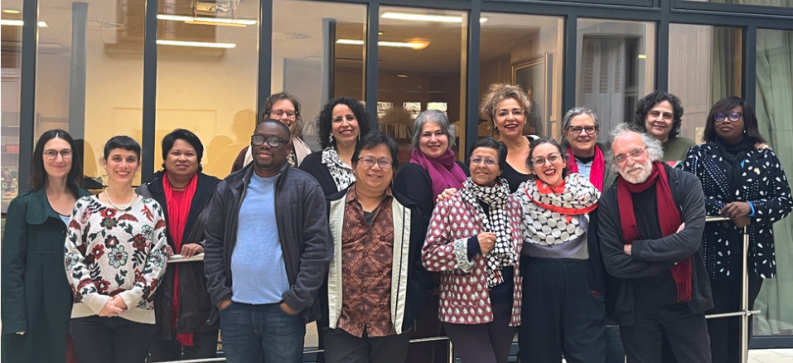

The coordinators of the language networks (credit: International Alliance of Independent Publishers).
By Olivia Snaije, Contributor
Coined by a collective of independent Chilean publishers in the late 1990s, the term “bibliodiversity” aims to apply cultural diversity to the publishing ecosystem. This idea is at the heart of The International Alliance of Independent Publishers, which will turn 25 next year. The Alliance just wrapped up its annual online book fair, Babelica which ran September 21-22.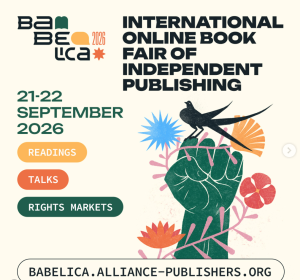 Based in Paris, the Alliance brings together 980 independent publishers from 60 countries and is divided into six linguistic networks: English, Arabic, French, Spanish, Portuguese and Persian. The website is in English, French, and Spanish
When the Alliance’s director, Laurence Hugues began her stewardship in 2009, there were 600 publishers within the organization. Their French and Spanish-language networks had been the strongest along with Eastern European publishers, but they actively sought to expand the diversity of the Alliance, said Hugues, adding that they are still developing the Asian, and Anglophone African networks. The Alliance organizes workshops and runs a resource center with tools for publishers.
Each linguistic network is coordinated by a publisher on a rotating basis. They meet yearly to discuss governance, as well as themes for the following year’s Babelica.
‘Resist and Hope’
Babelica has been running since 2022 and grew out of the convergence of workshops and conferences held by the Alliance over the years, and the publishers’ desire to reach a wider audience.
This year’s program was themed “resist and hope” and was accompanied by the publication of a literary magazine on the same topic. Thirty writers under the age of 30 from 30 different countries wrote texts about their daily life, resistance, hope and dreams, with an introduction written by the prize-winning Palestinian author Karim Kattan.
Panels from current and past Babelica fairs can be watched on replay. This year’s Babelica panels included one on AI, with publishers from Cameroon, Columbia, Mauritius, Morocco, and Switzerland, or imagining the future in the context of war, with publishers from Lebanon, Palestine, Syria, and Ukraine.
Like past editions of Babelica, two rights markets sessions were held for children’s books and adult fiction and nonfiction.
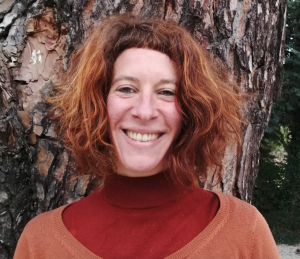
Laurence Hugues
“Rights exchanges have always happened within the organization,” said Hugues. “But the more we made it a formal exercise, the better it worked. It professionalizes things.” Some publishing houses were well versed in pitching, while others needed a framework that they could practice within, said Hugues.
This year’s rights market was impressive, with the vast majority of publishers from countries such as Argentina, Brazil, Chile, Mexico, Tunisia, Mali, Democratic Republic of Congo, Egypt, France, Belgium, Bulgaria, Canada or Taiwan keeping to a five-minute pitch to each other in English, French or Spanish, with interpretation provided in the same three languages. One third of the participants attending the rights sessions were publishers from outside the Alliance.
There are many rights exchanges between the Alliance’s publishers, affirms Hugues, even if she isn’t always informed of them. Because some publishers have tight budgets, or can be in difficult political or economic situations in their respective countries there is a great show of solidarity among publishers, with some exchanging book deals, or waiving or lowering fees, Hugues said.
Some recent deals that resulted from Babelica were English-language rights for a book by Chadian author Nétonon Noël Ndjékéry, Il n’y a pas d’arc-en-ciel au paradis (There is no rainbow in paradise) to Paperworth Books Limited, Nigeria and Regal House Publishing, U.S.
The Argentinian publisher, Libros de la Araucaria sold English-language rights for Elina Malamud’s El baile de la abuela muerta (The dance of the dead grandmother) to Ethos Books in Singapore.
Discussions are also underway between Togo and North Macedonia and Ecuador; between Nigeria and South Africa; and between Martinique and Guinea, said Hugues.
Zeinab Badawi’s An African History of Africa: From the Dawn of Humanity to Independence is undergoing a pan African co-edition into French from the French publishing house Faubourg to seven Francophone publishing houses on the African continent, which was coordinated and facilitated by the Alliance. In contrast to the price in France of €24.90, the book will be sold on the continent for €13.
Solidarity
From the feedback that Hugues gets regularly from publishers, the Alliance is most beneficial to them in terms of escaping a sense of isolation by belonging to a collective that is based on solidarity.
Publishers also appreciate being able to rely on a professional network in case of problems that arise when faced, for example, with censorship by authorities. Using the Alliance’s name can afford publishing houses credibility with those authorities. Furthermore, publishers find value in exchanging know-how whether in workshops, getting tips about AI, or sharing experiences concerning rights sales.
If the Alliance has been able to exist and grow for so many years, it’s also thanks to the steady funding from the start by a Swiss foundation, Charles Léopold Mayer. The foundation’s aim coincided with theirs, says Hugues: to create long-term alliances. Additional funding is sought project-to-project, and has come from institutions such as the Centre National du Livre (CNL), the Agence Française de Développement or from private sources such as Open Society or the Prince Claus Foundation.
For Hugues, the maturity the Association has now acquired after nearly 25 years is the fruit of these long-term alliances which have found common threads and a source of much needed solidarity among global independent publishers.
Comments
Fascinating and very interesting. Thanks so much.
It’s wonderful to see how the Alliance has grown. I attended their early meetings and translated some of their publications back in the day. Thank you for shining a light on their work.