

All Dogs Are Blue by Rodrigo de Souza Leão, published by And Other Stories, was the featured give away at this year’s New York launch for Brazil’s stint as Guest of Honor in Frankfurt.
By Iona Stevens and Matheus Perez
The absence of translated books in Europe and the US has been the subject of debate for a while now. Some publishers and institutes linked to the academic world— such as the Open Letter Books in the US, led by translation-enthusiast Chad Post, and the British Center for literary Translation in the UK, among others — promote the translation of “different” languages. But publishers still struggle with the lack of agents and editors fluent in those languages and the risky cost of translating unknown authors from other countries. Brazil is one of them.
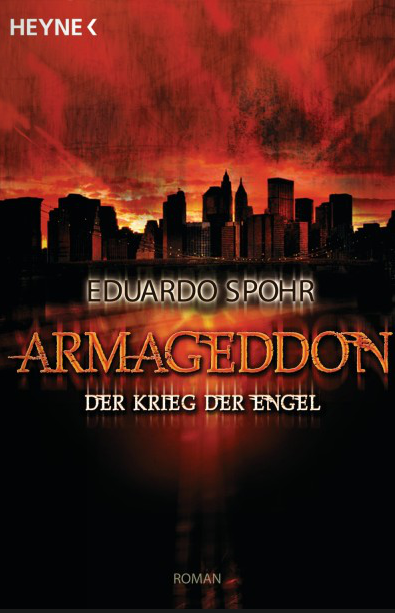
 Still, there are publishers who, based on sales figures in the author’s home country, are willing to take the risk. The Brazilian bestselling author Eduardo Spohr, for instance, had his first book, The Battle of the Apocalypse, launched by Random House in Germany. The book was a huge success in Brazil and is the German publisher’s first fantasy novel by a Brazilian author, with a print run of 6,000 copies, it is modest print by German standards, but highly optimistic for Brazilian ones.
However, generally speaking, the publishers who are most aware of Brazilian literature are the small, independent ones. The “Anglo-Carioca” publisher —i.e., based in the UK, but with a foot in Rio de Janeiro, And Other Stories started publishing books in 2011 and will have two titles from Brazilian authors by the end of the year. The first of which, All Dogs Are Blue by Rodrigo de Souza Leão, is already available and was featured at last month’s launch party in New York City honoring Brazil’s Guest of Honor program for the Frankfurt Book Fair.
For Sophie Lewis, editor at large at And Other Stories, the biggest difficulty of publishing Brazilian books abroad is the fact that the authors are unknown in Britain and in the US. In relation to foreign authors in general, “people are usually afraid of what they do not know and are unaware of what books surround them. To promote a foreign author requires a bigger effort than an English or American one, who are likely to already have contacts, can speak in public and extend the network,” says Lewis. In relation to Brazilian books specifically, she points out that “the lack of information about sales and reviews from publishers does not help us to promote the author”.
 Another indie publisher that took a bet on Brazilian titles this year is Germany’s Klaus Wagenbach, which started publishing books from Brazil in 2012. Editor Thomas Bosshard says that before 2012, there was no one available to him who read in Portuguese. But, after overcoming the language barrier, Wagenbach has already published nine Brazilian titles, including renowned authors like Graciliano and João Ubaldo Ribeiro, Rachel de Queiroz, and new voices like Paulo Scott. Most titles had already been published and have sold out. Others, such as Scott’s Unreal Inhabitant, are fresh for this year’s fair.
Despite the positive reception for these translations in Germany — three of the six books published in May have already had a second printing — Bosshard thinks it’s too early to know whether the Brazilian books are going to be long term hits. According to him, a lot depends on bookstores. If the publisher does not buy the display and the bookseller does not like the book, it will probably not go forward.
Still, Wagenbach already has plans to publish translations more Brazilian authors, including Graciliano Ramos’ memoir Childhood, and possibly another novel by Paulo Scott, according to Bosshard. “The Germans know little about Brazilian culture. It’s a niche that needs to be worked on. Brazil cannot be left out when we talk about Latin American literature” says Bosshard.
Apart from And Other Stories and Wagenbach, publishers like A1 Verlag, Aufbau, Hentrich & Hentrich in Germany; Metailié, Cambourakis, Anacaona and Phébus in France; Bloomsbury and Hamish Hamilton/Penguin in the UK; Siruela, Random House Mondadori in Spain; and Tagus Press and Dalkey Archive in the US also have been investing in translations of Brazilian titles.
As a whole, prospects for Brazilian books abroad are looking up and not only due to the government’s translation grants programs. Sophie Lewis points out, for example, Granta’s “Best Young Brazilian Writers” volume, launched in Brazil last year and this year in England, and the country’s economic development, have booth contributed to the increased visibility of Brazilian literature abroad. Other private initiatives include FlipSide, the festival dedicated to Brazilian literature – the British version of the FLIP festival in Pararty. FlipSide takes place this weekend in Suffolk.
Bosshard sums it most succinctly and best: “The time to publish Brazilian literature is now.”